 Greensboro
 What Does HVAC Repair Cost in Greensboro?
Published ranges for the repairs Triad homeowners actually get quoted — plus the arithmetic for deciding when a repair stops being worth doing.
What Common Repairs Actually Cost Here
Exact pricing depends on your system, your equipment brand and how accessible the failed part is. These are the ranges most Greensboro-area homeowners see. You should always get a firm quote after diagnosis and before work starts.
| Repair | Typical Range |
|---|---|
| Diagnostic / service call | $79 – $129 |
| Capacitor replacement | $150 – $300 |
| Contactor replacement | $150 – $320 |
| Condensate drain clear & treatment | $100 – $250 |
| Thermostat replacement | $150 – $400 |
| Condenser or blower fan motor | $300 – $700 |
| Defrost control board (heat pump) | $300 – $650 |
| Ignitor or flame sensor (furnace) | $150 – $400 |
| Refrigerant leak repair & recharge | $250 – $1,200 |
| Reversing valve (heat pump) | $600 – $1,500 |
| Evaporator coil replacement | $900 – $2,500 |
| Compressor replacement | $1,500 – $3,000+ |
Ranges reflect typical Greensboro-area residential pricing and are not a quote. After-hours and holiday calls carry a premium.
Why Two Homes Get Different Prices for the Same Fault
- Where the part sits. An evaporator coil in an accessible closet is a very different job from the same coil in a tight attic in August. Labour time is real.
- Refrigerant type. Older systems running phased-down refrigerants cost considerably more per pound to recharge. On an ageing R-22 system this alone can push a repair past the replacement threshold.
- Brand and availability. Common parts are stocked locally; proprietary boards for less common brands may need ordering, which adds both cost and days.
- Whether it is one fault or three. A failed capacitor that took the fan motor with it is two repairs. Systems that have been limping often have stacked faults.
- Timing. The first heat wave and the first hard freeze are the two busiest windows of the year, and after-hours rates apply outside normal scheduling.
The Arithmetic Worth Doing
The rule of thumb most of the trade uses: if the system is over 12 to 15 years old and the repair costs more than about a third of a replacement, replacement usually makes better financial sense.
In this climate there is an extra factor. Heat pumps have improved substantially, and the running-cost difference between a fifteen-year-old unit and a current one is noticeable on a Greensboro power bill — particularly if the old system leans on backup heat strips through every cold snap. That shifts the calculus toward replacement earlier than the raw repair cost alone would suggest.
Below about ten years, repair is almost always right. The equipment has life left and a single component failure is not a verdict on the system.
The situation to watch for is a major refrigerant repair on an older system. Between the refrigerant cost, the labour and the likelihood of the next leak, that is frequently the moment to price replacement rather than keep patching.
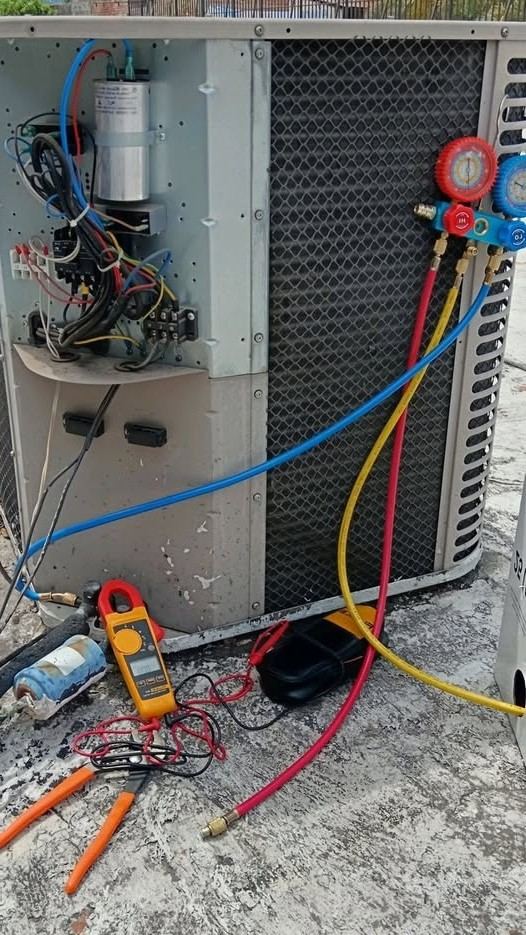
Questions Worth Asking on the Phone
- What is the diagnostic fee, and is it credited toward the repair? Both answers should come easily.
- Will I get a firm quote before work starts? Yes is the only acceptable answer.
- Is there an after-hours rate right now? Ask before booking, not after.
- If it is a refrigerant issue — are you finding the leak or just recharging? A recharge without a leak search is a stopgap you will pay for again next season.
- Is the technician certified to handle refrigerant? It is a legal requirement, not a nicety.
Whatever the system, the specific pages have more detail on symptoms and what the work involves: AC repair, heat pump repair, and furnace repair. If it has failed outside business hours, emergency service is answered around the clock.
Frequently Asked
What is the average HVAC repair cost in Greensboro?
Most residential HVAC repairs in the Greensboro area land between $150 and $650. A failed capacitor or contactor sits at the low end, while refrigerant leak repairs, fan motor replacements and control board work cost more. Major component failures such as a compressor or evaporator coil run well above that range and are usually the point where replacement enters the conversation.
How much is a diagnostic or service call fee?
Diagnostic visits in the Triad typically run $79 to $129, and that fee is normally credited toward the repair if you approve the work. Be wary of anyone who cannot tell you the diagnostic fee before they come out.
Why do emergency and after-hours calls cost more?
Nights, weekends and holidays carry a premium because the technician is being called out outside normal scheduling. It is worth asking what the after-hours rate is when you book. For a genuine emergency — no heat during a freeze, no cooling during a heat advisory — the premium is usually worth paying rather than risking further damage.
When does repairing stop making sense?
A useful rule of thumb: if the system is over 12 to 15 years old and the repair costs more than about a third of replacement, replacement usually wins. That is especially true for heat pumps in this climate, where a modern unit noticeably cuts running costs. For younger systems, repair is almost always the right call.
Should I get more than one quote for a major repair?
For anything in the four-figure range, yes. For a $200 capacitor on a 95-degree afternoon, the delay costs more than the potential saving. The bigger the number, the more a second opinion is worth — particularly on compressor and coil diagnoses, where replacement is the expensive alternative.
Want a Firm Number Before Anyone Comes Out?
Describe the symptom on the phone and you will get an honest range — plus a straight read on whether it can safely wait.
Call (336) 555-0148